
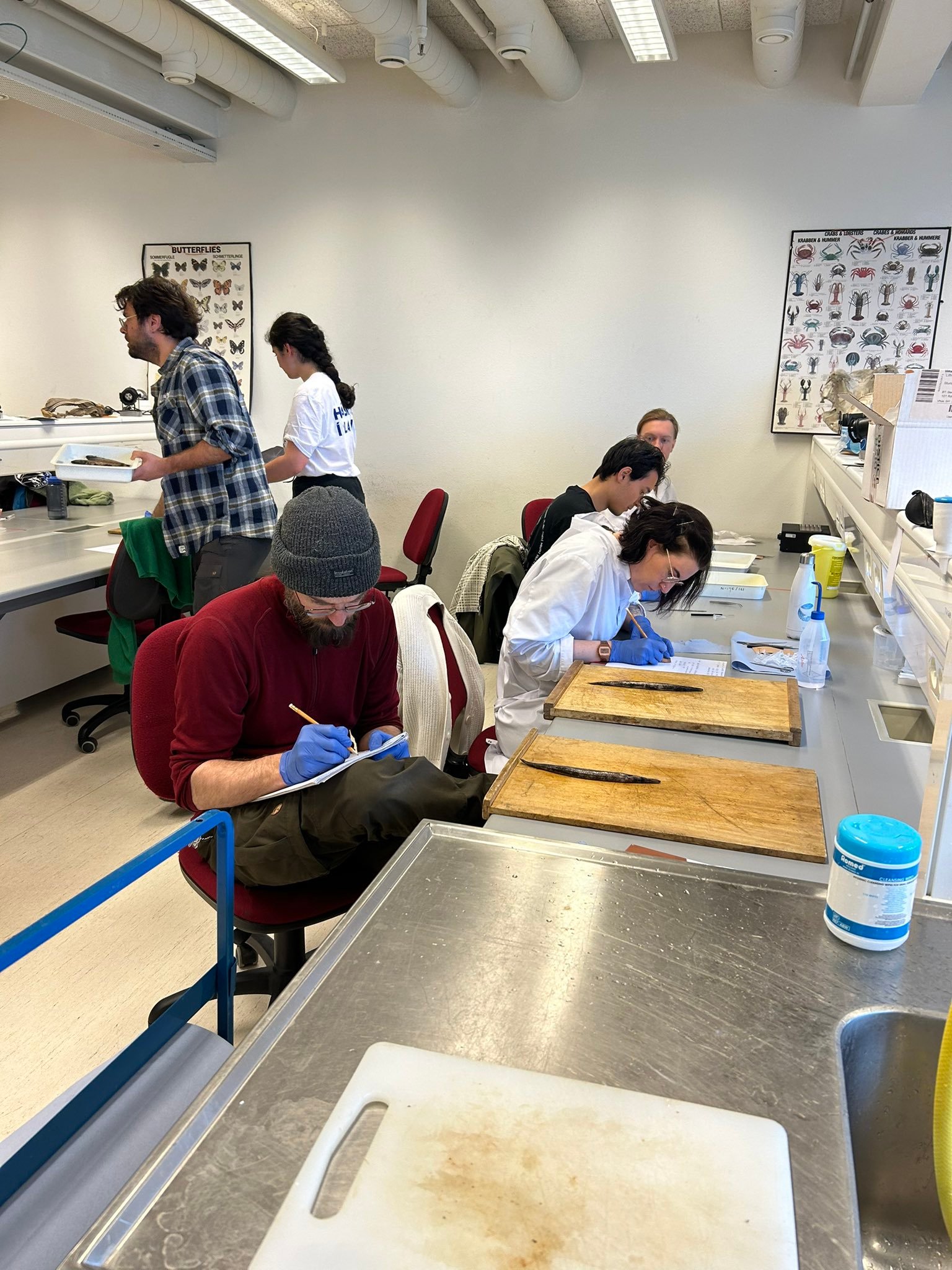
During the SUMMER school at the University of Iceland, students got hands-on experience working with mesopelagic fish in the lab. First, length measurements of the fish were performed. Students then extracted otoliths (ear stones), looked for internal parasites, and studied the fishes gut content. Tissue samples were also retrieved, for use in DNA analysis.
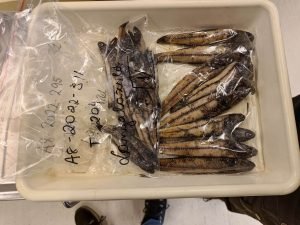
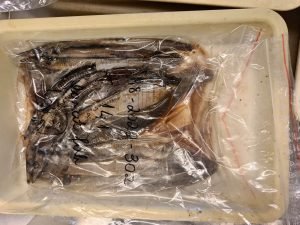
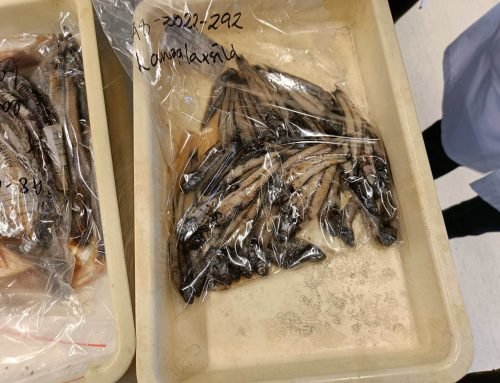
Two bags of fish that were dissected. To the left Lanternfish, and to the right Lancetfish.
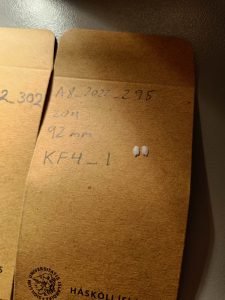
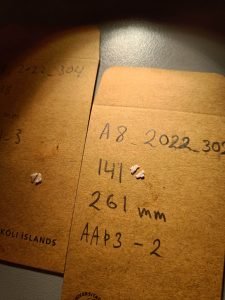
These pairs of small white ear stones, are called otoliths. They are part of the fish’s inner ear, and are used for hearing and balance. Otoliths can be used by scientists to figure out the age of a fish - in the same way you can count the annual rings in a tree, you can count the number of rings in an otolith! In addition, otolith shape varies among different species - so that they can be used in species recognition! The pictures above show the otoliths of a lanternfish to the left, and lancetfish to the right. After extraction, the otoliths were stored in the small paper bags. These bags had the fishes length, station, and species number written on them.
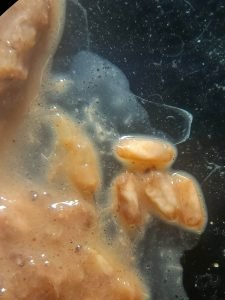
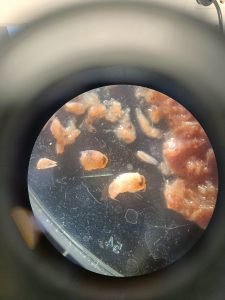
These pictures are examples of what the students found inside the stomachs of their dissected mesopelagic fishes. To the left you can see multiple carapaces of krill, with a visible spike (rostrum) at the ends. To the right you can see pieces of amphipods, recognizable by their large black eyes.
In conclusion, it was a great learning experience for all students involved, who gained valuable skills they may use later in their careers!

Leave A Comment
You must be logged in to post a comment.