
Fishes inhabiting the mesopelagic zone probably account for the majority of the world’s fish biomass. As a result they have recently attracted considerable attention within science, industry and media, especially since they are part of the biological carbon pump and may be a potential new food source. However, the biology and ecology of mesopelagic fishes are poorly known, at least compared to fishes in the coastal and epipelagic zones. Hence, there is an urgent need to understand how environmental conditions and species interactions shape these assemblages and how they contribute to the structure and functioning of marine ecosystems.
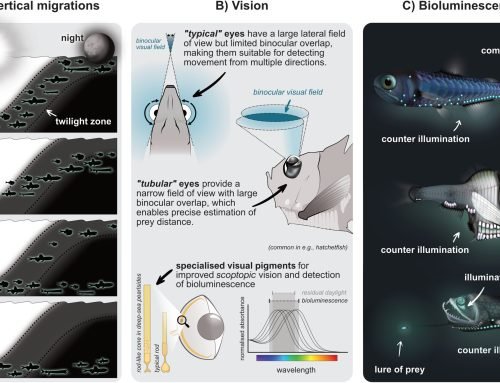
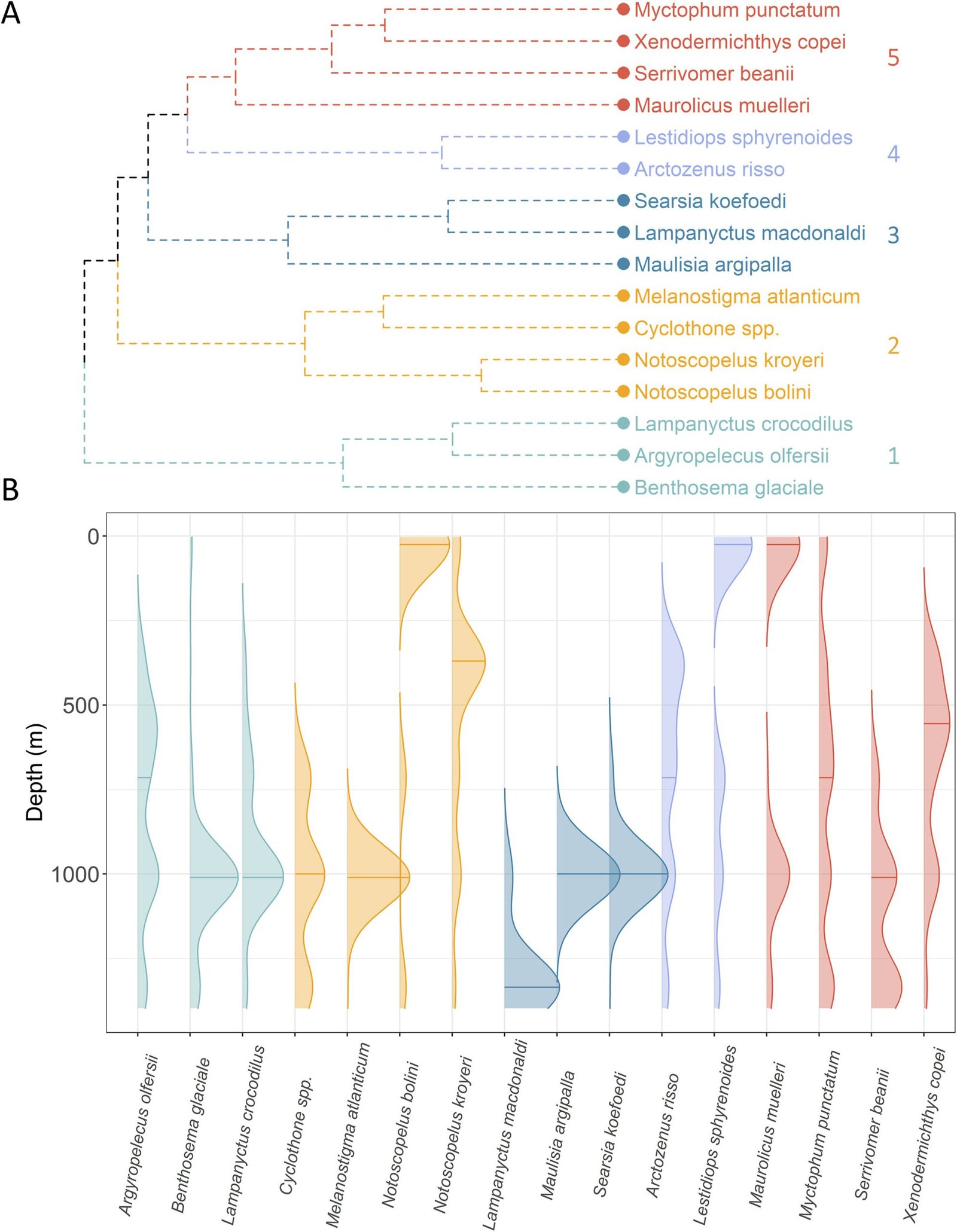
To overcome this knowledge gap SUMMER researchers teamed up with colleagues from the EU project “TRIATLAS”, as well as other specialist on mesopelagic fish internationally to undertake a comprehensive synthesis of existing knowledge of traits of mesopelagic fishes (Andresen et al., in review). Among the most striking adaptations for survival, feeding, and growth and reproduction in the mesopelagic realm the review highlights and discuss several key traits, including vertical migration, specialized vision, and the use of bioluminescence (Figure 1).
Figure 1. Bioluminescence can have multiple usage areas, as seen in these three mesopelagic fish species (by T. Langbehn)
Bioluminescence can be used for many purposes including communication (e.g., mate finding), predator avoidance (e.g., by counter illumination) or prey attraction (e.g., in the form of lures). In general, the review found that many traits are interrelated as a result of trade-offs, which may help us to better understand selection pressures. However, the study also identifies major knowledge gap exist for traits that require frequent sampling, assessment under experimental conditions, or age determination. Finally, the authors stress that the unique adaptations of mesopelagic fishes need to be included in management strategies as well as fundamental research of the habitat.
Text provided by Martin Lindegren, DTU Aqua



Leave A Comment
You must be logged in to post a comment.